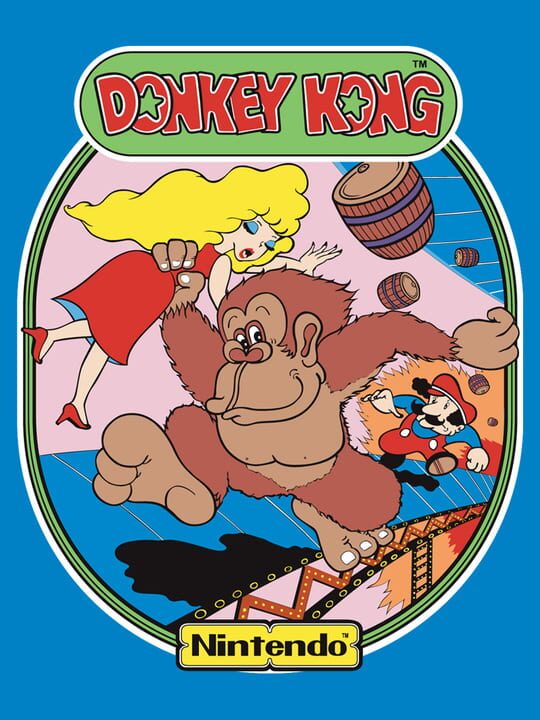
Donkey Kong
Main Game
RELEASED
7.2
Jul 9, 1981
ArcadebyNintendo
Overview:|
As a foundational Main Game released in 1981, this arcade platformer tasks you with scaling multi-tiered industrial levels—like construction zones—to rescue Pauline from Donkey Kong. The core gameplay loop centers on precise timing to jump over rolling hazards and utilize ladders while managing a strict timer. It is historically notable for integrating one of the earliest complete narratives in gaming via simple cutscenes, introducing both Mario (as "Jumpman") and the titular ape.
This foundational arcade title, first released in 1981, established a new standard for action-platforming challenges. It serves as the debut for two of the industry's most recognizable figures, including the character originally known as "Jumpman," who later became a global icon.
The premise is straightforward: a giant ape has abducted the beautiful Lady and carried her to the top of a perilous construction site. Players must navigate this dangerous, multi-tiered environment to reach the top and complete the rescue before time expires.
Core Gameplay Loop and Mechanics
This game is categorized as a Main Game, offering a pure arcade experience focused on precise timing and vertical ascent across distinct, industrial-themed stages. The primary objective is climbing to the highest point of the structure while managing a constant countdown timer.
Navigating the Industrial Hazards
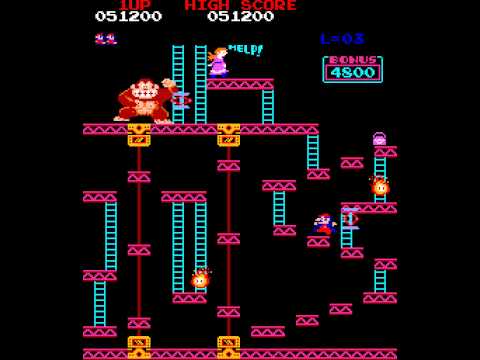
The setting is defined by its early industrial aesthetic, featuring environments such as construction zones, cement factories, and complex scaffolding structures. The core mechanic requires players to master jumping to avoid continuous threats thrown by the antagonist ape.
The gameplay loop centers on climbing ladders, timing jumps to clear rolling barrels and other projectiles, and strategically interacting with environmental elements like removing rivets from the girders to affect the structure or clear a path forward.
What makes this title historically significant in the platform genre?
This title is notable for being one of the earliest examples of a complete narrative structure integrated directly into the gameplay experience. Simple, non-interactive cutscenes advance the story between stages, providing context for the action beyond simply achieving a high score.
Key Features and Content Status
As an original release for the Arcade platform, the core experience remains consistent with its initial design. There are currently no official downloadable content packs or expansions associated with this version.
The game has seen at least one official remake since its initial launch, offering modern interpretations of the classic structure, but the original 1981 version remains a singular, self-contained challenge.
Game Details
Primary Name: Donkey Kong
Alternative Names:
DK (Acronym)
The King (Other)
Type: Main Game
Series: Donkey Kong
Developer: Nintendo, Ikegami Tsushinki
Publisher: Nintendo
Release Information
Release Date: Jul 9, 1981
Genres & Themes
Genres: Platform, Arcade
Themes: Action
Platforms
Arcade
Game Modes
Perspective: Side view
Player Modes: Single-player
Game Modes: Single player
Age Ratings
ESRB:E (Everyone)
PEGI:3+
 Soren
Soren