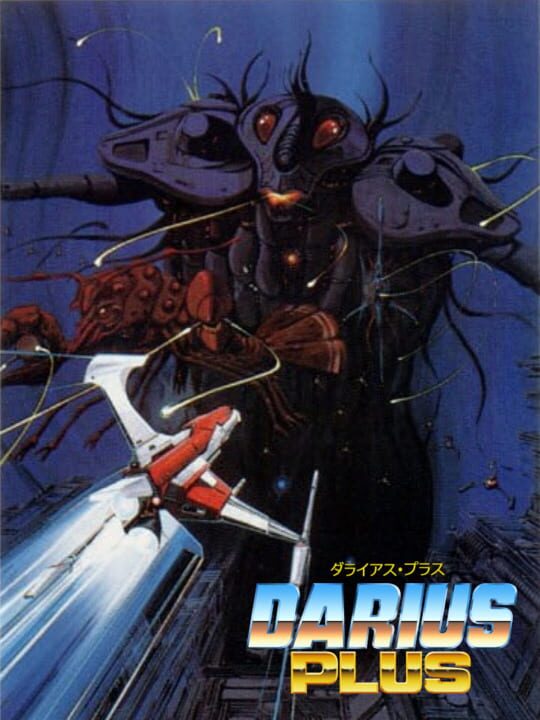
Darius Plus
Port
RELEASED
Apr 16, 1990
Turbografx-16/PC Engine CDPC Engine SuperGrafx+2byBits Laboratory•Taito
Overview:|
As a 1990 port, Darius Plus delivers a 2D horizontal scrolling shooter experience where you pilot the Silver Hawk against robotic sea creatures across the Darius system. Core gameplay involves shooting enemies and collecting power-ups to upgrade missiles and bombs. Its distinctive feature is the branching path structure after each boss, allowing players to choose subsequent zones, which significantly increases replay value over its single-screen console adaptation of the original arcade design.
This title, released in 1990, is a console Port of a seminal 1980s arcade shooter, brought to platforms including the Turbografx-16/PC Engine CD, PC Engine SuperGrafx, TurboGrafx-16/PC Engine, and Wii. As a port, it aims to translate the core experience of its arcade predecessor onto home hardware, adapting the massive, multi-screen presentation to fit a standard television display. The game plunges players into a desperate fight for survival in the year 201, where the peaceful Darius system has been overrun by the aggressive Belsar alien force. Players assume the role of heroic pilots, such as Proco Jr or Tiat Young, commanding the iconic Silver Hawk fighter spacecraft against an onslaught of bizarre, robotic aquatic life forms—including mechanical fish, squid, and snails—that serve as the primary antagonists.
Core Gameplay Mechanics and Setting
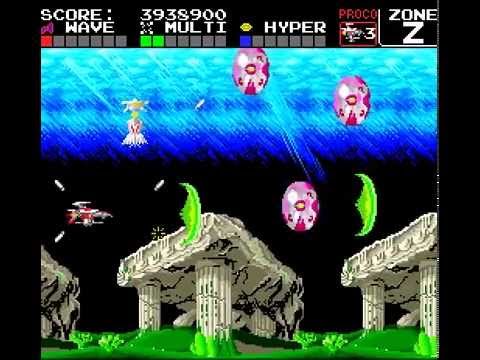
The game operates as a two-dimensional, horizontally scrolling shoot 'em up. Players navigate the Silver Hawk through various stages, referred to as "zones," battling waves of enemies, ground vehicles, and turrets. The ship is equipped with standard forward-firing missiles, aerial bombs for vertical attacks, and a protective force field. Power-ups, typically appearing as large, colored orbs dropped by specific enemies, are crucial for upgrading these primary systems.
What is the defining feature of this shooter's structure?
A key element distinguishing this series is its non-linear progression system. Upon defeating a zone boss, the player is presented with a choice of branching paths, leading to different subsequent zones. While the original arcade version featured 28 potential zones, a single playthrough typically consists of only seven stages, significantly enhancing replay value as different routes lead to varied final encounters and potential endings.
Adaptations in the Console Port
Because this is a port, the most significant technical adaptation involves the screen layout. The original arcade version utilized a unique setup involving three horizontally aligned monitors to create an expansive playfield. This feature could not be perfectly replicated on single-screen home consoles, resulting in a scaled-down view of the action compared to the arcade original. This specific version, Darius Plus, was developed by Bits Laboratory and published by NEC Avenue for the PC Engine family of consoles.
Platform Specific Enhancements
It is noted that when played on the PC Engine SuperGrafx hardware, this version exhibits minor graphical improvements, such as reduced flicker and slowdown, compared to running on the standard PC Engine hardware. This specific release is the full game conversion, distinct from the extremely limited Darius Alpha beta release.
Content Availability and Replayability
There are no officially listed downloadable content packs, expansions, or remasters associated with this 1990 title. The primary value proposition for this port lies in its replayability, driven entirely by the branching zone structure that necessitates multiple runs to experience all available content.
Game Details
Primary Name: Darius Plus
Alternative Names:
Darius PC-Engine SuperGrafx TurboGrafx-16 HuCard (Alternative title)
Type: Port
Series: Darius
Developer: Bits Laboratory
Publisher: Taito, NEC Avenue
Release Information
Release Date: Apr 16, 1990
Genres & Themes
Genres: Shooter, Arcade
Themes: Action, Science fiction
Platforms
Turbografx-16/PC Engine CDPC Engine SuperGrafxTurboGrafx-16/PC EngineWii
Game Modes
Perspective: Side view
Player Modes: Single-player
Game Modes: Single player
Age Ratings
CERO:A (All Ages)
 Soren
Soren