
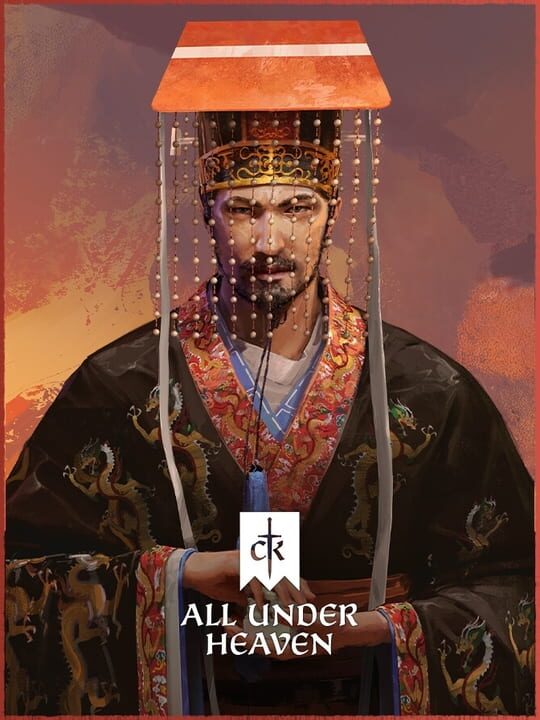
Crusader Kings III: All Under Heaven
Overview:|
As a strategy RPG simulation expansion released in late 2025, Crusader Kings III: All Under Heaven deepens the core grand strategy experience by focusing on Asian history. Players engage in role-playing and political simulation, centered on mechanics for claiming and maintaining the Mandate to shape vast empires. This content adds region-specific political structures and new role-playing avenues within the existing framework, appealing to those who enjoy complex dynastic management and large-scale historical sandbox gameplay.
This title is a major expansion for the base grand strategy role-playing simulation game, released in late 2025 for Windows, Linux, and Mac platforms. It operates within the established framework of deep character interaction, political maneuvering, and dynastic management, shifting the focus to historical and cultural contexts within Asia.
Core Gameplay Focus and Mechanics
The central gameplay loop revolves around the strategic management of a dynasty within a new geographical and political sphere. Players engage in intricate diplomacy, warfare, and internal governance, now overlaid with mechanics specifically designed around the concept of claiming and maintaining the Mandate. This system dictates legitimacy and the right to rule over diverse populations.
As a strategy RPG simulation, success relies on balancing character traits, managing vassals, and navigating complex religious and cultural landscapes unique to this region. The game emphasizes long-term planning, where personal decisions—marriages, assassinations, and education—directly impact the stability and expansion of the realm across generations.
What is the Distinctive Feature of This Expansion?
Integration of the Mandate System
The most distinctive feature introduced is the Mandate mechanic. This system provides a new layer of political pressure and objective setting, requiring rulers to actively demonstrate fitness to govern according to regional philosophies. Failure to uphold the Mandate can lead to internal strife, rebellions, or the loss of legitimacy, fundamentally altering the path of a campaign.
Regional Political Structures
The expansion introduces region-specific political structures that differ significantly from existing mechanics. These structures influence how titles are held, how succession is managed, and the types of internal conflicts that arise. Players must adapt their traditional strategies to these new constraints and opportunities.
Game Modes and Current State
The game supports both single-player (ruling a dynasty) and multiplayer modes, allowing players to engage in competitive or cooperative grand strategy sessions. As a recently released expansion, the community feedback generally centers on the integration depth of the new Asian content and the balance adjustments required for the Mandate system within the existing grand strategy framework.
Role-Playing Opportunities
The setting provides extensive new role-playing opportunities tied to the cultural and historical narratives of the region, allowing players to pursue specific goals related to unification, cultural assimilation, or maintaining traditional hierarchies.
Game Details
Primary Name: Crusader Kings III: All Under Heaven
Type: Expansion
Part of: Crusader Kings III
Developer: Unknown
Publisher: Unknown
Release Information
Release Date: Oct 28, 2025
Genres & Themes
Genres: Role-playing (RPG), Simulator, Strategy
Platforms
LinuxPC (Microsoft Windows)Mac
Game Modes
Perspective: Unknown
Player Modes: Single-player
Game Modes: Single player, Multiplayer

 Soren
Soren