
Crossout: Dragonfly
Overview:|
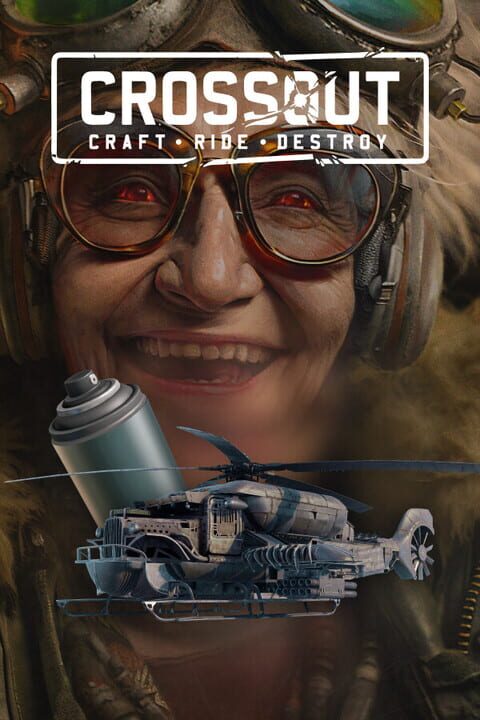
Crossout: Dragonfly is a vehicular combat game blending shooter and racing elements, released in 2024. In this post-apocalyptic setting, players construct custom armored vehicles using extensive options for weapons and armor, then engage in battles. The core loop involves designing, upgrading, and fighting. The "Dragonfly" iteration notably expanded design freedom by increasing the parts limit and adding new components like the "MR-2 Maple" rotor.
This title, first released in 2024, operates as a vehicular combat game that integrates core mechanics from both the shooter and racing genres within a post-apocalyptic setting. The primary gameplay loop centers on players designing, constructing, and piloting custom armored fighting machines against other players or AI opponents.
Core Gameplay and Customization
The central feature of the experience is the deep vehicle construction system. Players gather components—including chassis parts, armor plating, weaponry, and movement systems—to engineer unique combat vehicles. Customization extends beyond mere aesthetics; the placement and selection of parts directly influence the vehicle's performance, durability, and combat effectiveness. Success often depends on balancing offensive power with structural integrity and mobility.
Combat engagements are fast-paced, requiring players to manage weapon cooldowns, aim precisely, and utilize terrain for cover or tactical advantage. Damage modeling is detailed, meaning specific components, such as wheels, weapons, or engines, can be targeted and disabled during a fight.
What makes the current iteration distinct?
Recent developments, such as the "Dragonfly" update, have expanded the design sandbox significantly. This includes the introduction of specialized components, like the "MR-2 Maple" rotor, which allows for the creation of vehicles with aerial or hybrid movement capabilities. Furthermore, these updates often introduce an increased parts limit, enabling players to build more complex and heavily armed creations than previously possible.
How does vehicle design impact combat?
The modular nature of the building system means that every design choice has mechanical consequences. A vehicle built for heavy frontal armor might sacrifice speed, while a lightweight design focused on speed might be vulnerable to focused fire. Players must adapt their builds to the current combat environment and the types of threats they anticipate facing.
Audience Appeal and Progression
This game appeals to players who enjoy persistent progression systems tied to crafting and modification, as well as those who favor direct, action-oriented PvP encounters. The emphasis on engineering and strategic loadout preparation caters to players who prefer deep mechanical engagement over simple twitch reflexes alone.
Game Details
Primary Name: Crossout: Dragonfly
Type: Pack / Addon
Part of: Crossout
Developer: Unknown
Publisher: Unknown
Release Information
Release Date: Feb 14, 2024
Genres & Themes
Genres: Shooter, Racing
Themes: Action
Platforms
PC (Microsoft Windows)Xbox One
Game Modes
Perspective: Unknown
Player Modes: Single-player
Game Modes: Multiplayer, Co-operative, Massively Multiplayer Online (MMO)
Age Ratings
ESRB:T (Teen)
PEGI:7+
USK:12+
GRAC:ALL (All Ages)
CLASS_IND:L (All Ages)
ACB:PG (Parental Guidance)
Videos
No videos available for this game.
 Soren
Soren