
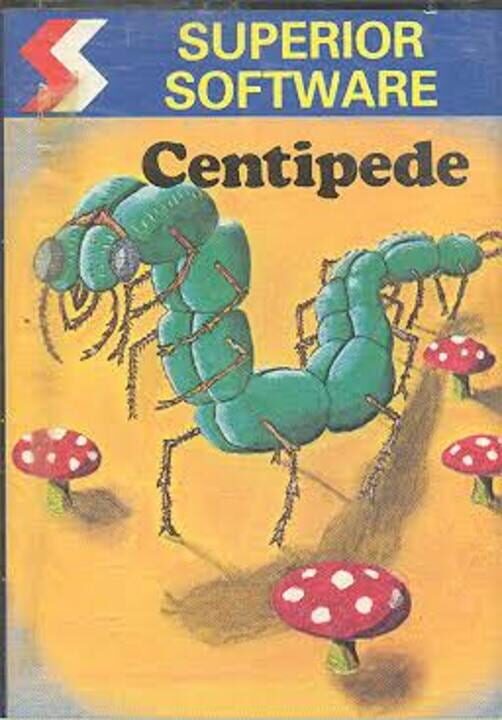
Centipede
Overview:|
As a 1983 port of the classic arcade title, Centipede delivers fast-paced, reflex-based action on the BBC Microcomputer System. You control a shooter at the bottom of the screen, tasked with destroying a segmented centipede descending from above; hitting the creature causes it to split into smaller, faster threats. The core loop involves strategic movement around destructible mushrooms while managing secondary threats like spiders. Its distinctive feature is the dynamically segmenting primary enemy, demanding constant adaptation.
This title is a direct translation, or port, of the highly influential arcade classic, bringing its fast-paced, insect-blasting action to the BBC Microcomputer System. Released in 1983, this version aims to replicate the core experience that defined early competitive gaming. As a port, its primary value proposition lies in delivering a faithful rendition of the original gameplay mechanics on a home computer platform of that era. The atmosphere is purely arcade-driven: immediate, challenging, and focused entirely on high-score pursuit within a confined, colorful digital arena.
Core Gameplay Mechanics and Setting
The setting is abstract, placing the player at the bottom center of the screen, controlling a small shooter unit. The primary objective is to eliminate a massive, segmented centipede that descends from the top of the screen. This creature starts long and breaks into smaller, faster segments upon being hit, increasing the immediate threat level.
The gameplay loop revolves around precision shooting and strategic movement. The centipede segments move horizontally across the screen, forcing the player to weave between incoming insect bodies. A unique environmental element involves mushrooms scattered across the playfield. These mushrooms serve as temporary cover, but they can be destroyed by either the player or the centipede, opening up new pathways for attack or increasing the danger of incoming fire.
What makes this game unique in its genre?
The core mechanic that distinguishes this game is the segmented nature of the primary adversary. Unlike many contemporary shooters where enemies follow predictable patterns, the centipede dynamically changes its pathing and speed based on player interaction. Furthermore, as the game progresses, other hostile arthropods—such as spiders and fleas—are introduced, adding layers of complexity to the defensive and offensive strategy required to survive.
Platform and Release Context
This specific iteration was developed for the BBC Microcomputer System and was published in late 1983. Being a port, it represents an effort to translate the responsive, real-time demands of an arcade cabinet experience onto the capabilities of the home microcomputer hardware available at the time. It belongs firmly within the Arcade genre, prioritizing quick reflexes over narrative depth.
Additional Content Availability
Regarding supplementary material, this release is self-contained. There are currently no recorded official DLCs, expansions, or remakes associated with this 1983 BBC Micro version.
Game Details
Release Information
Release Date: Dec 31, 1983
Genres & Themes
Genres: Arcade
Themes: Action
Platforms
BBC Microcomputer System
Game Modes
Perspective: Bird view / Isometric
Player Modes: Single-player
Game Modes: Single player
Videos
No videos available for this game.
 Soren
Soren