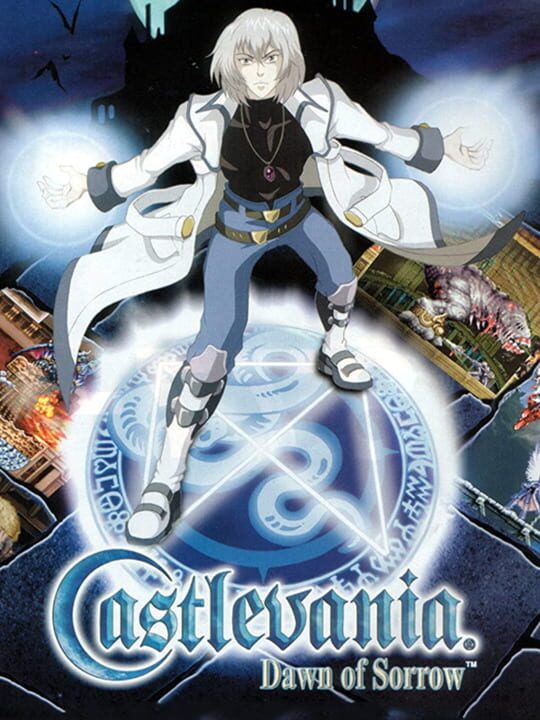
Castlevania: Dawn of Sorrow No Required Touch Screen
Overview:|
This 2017 release is a modification (Mod) for the Nintendo DS action-platformer, Castlevania: Dawn of Sorrow. Its core gameplay loop involves exploring a gothic map, battling enemies, and acquiring abilities, consistent with the source material. The distinctive feature of this version is the complete removal of mandatory touch screen input, allowing players to experience the entire game using only traditional button and D-pad controls, ensuring full accessibility for all mechanics.
This title is classified as a Mod, released in 2017, which alters the original Nintendo DS game, Castlevania: Dawn of Sorrow. It maintains the core genres of Platform and Hack and slash/Beat 'em up, providing an action-adventure experience within a gothic setting. The value proposition of this specific version centers entirely on control scheme accessibility for the base game.
Core Gameplay Loop and Setting
As a modification of the parent title, players engage in exploration across a large, interconnected map, characteristic of the Metroidvania structure. The gameplay loop involves traversing environments, acquiring new abilities and equipment, and engaging in fast-paced combat against various enemies and bosses using melee weapons and magical attacks.
The narrative and world design remain consistent with the source material, focusing on the established dark fantasy atmosphere of the series.
What is the primary change introduced by this modification?
The most significant feature of this release is the complete removal of required touch screen input for all game mechanics. The original Nintendo DS version integrated touch controls for certain actions, such as specific spell activations or map navigation. This modification ensures that every aspect of the game—from combat maneuvers to menu interaction—can be executed solely through traditional button presses and the directional pad.
Impact on Playability
This adaptation allows for a purely traditional control experience, which can be beneficial for players preferring standard control layouts or those experiencing compatibility issues with touch input emulation.
Content Status
This modification does not introduce new story content, downloadable content (DLC), or standalone expansions. It functions strictly as a patch to adjust the input methods of the existing game.
What makes this version distinct from the original release?
The distinction lies entirely in accessibility via control mapping. While the level design, enemy placement, and story progression are identical to the original, this version guarantees that completion is possible without ever needing to utilize the touch screen, preserving the integrity of the game's challenge while adapting its interface.
Game Details
Primary Name: Castlevania: Dawn of Sorrow No Required Touch Screen
Type: Mod
Part of: Castlevania: Dawn of Sorrow
Developer: LagoLunatic
Publisher: Unknown
Release Information
Release Date: Apr 6, 2017
Genres & Themes
Genres: Platform, Hack and slash/Beat 'em up
Themes: Action, Fantasy, Horror
Platforms
Nintendo DS
Game Modes
Perspective: Side view
Player Modes: Single-player
Game Modes: Single player
Videos
No videos available for this game.
 Soren
Soren