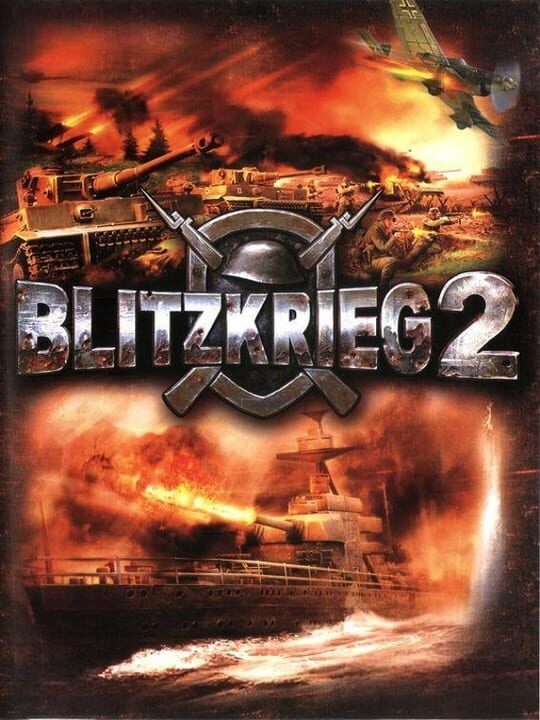
Blitzkrieg 2
Main Game
RELEASED
8.0
Dec 31, 2005
PC (Microsoft Windows)byNival Interactive•cdv Software Entertainment
Overview:|
As a Real-Time Strategy title released in 2005 for PC, this game focuses purely on World War II tactical combat, omitting base building and resource management. You command historically accurate forces, emphasizing strategic positioning and battlefield deployment across various campaigns. It features an upgraded 3D graphics engine and expands the unit roster to over 250 distinct military assets, offering a deep, scenario-driven tactical experience supplemented by two official expansions.
This is a Real-Time Strategy (RTS) title originally released in late 2005 for PC (Microsoft Windows). It centers its gameplay experience entirely around the large-scale tactical engagements of World War II, deliberately shifting the focus away from typical RTS elements like base construction and resource gathering. Players command historical military units across various theaters of the conflict, emphasizing strategic positioning and moment-to-moment battlefield management over economic development.
Core Gameplay Focus: Tactical WWII Combat
The primary appeal of this title lies in its dedication to historical military simulation within a real-time environment. Success hinges on the skillful deployment and utilization of available forces; players must execute specific objectives using historically accurate units and tactical doctrine pertinent to the era. This design choice positions the game closer to a tactical wargame experienced in real-time, rather than a traditional base-building RTS.
What makes this game unique in its genre?
The core design philosophy prioritizes tactical depth over macro-management. Players must adapt to the specific challenges of each scenario, leveraging the strengths and mitigating the weaknesses of their deployed forces on the fly. The game emphasizes unit synergy and positioning as the critical path to victory.
Technological and Unit Enhancements
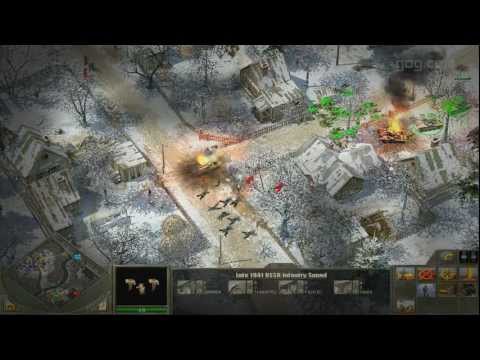
Compared to its predecessor, this sequel features a significant technical upgrade. The game utilizes an enhanced graphics engine that supports a fully three-dimensional environment, offering a more detailed visual presentation of the battlefield and unit models.
Unit Roster and Scale
The scope of available military hardware has been expanded substantially for this installment. The game boasts an arsenal featuring over 250 distinct units, providing a wide array of tactical options for players commanding forces across the major campaigns of the conflict.
Available Content and Post-Launch Support
As a main game release, the core experience is self-contained. While there is no official downloadable content (DLC) associated directly with this version, the established framework has been supplemented by two official expansion packs released post-launch, which introduce new scenarios and content to the existing framework.
Game Details
Primary Name: Blitzkrieg 2
Alternative Names:
Блицкриг II (Russian title)
Type: Main Game
Series: Blitzkrieg
Developer: Nival Interactive
Publisher: cdv Software Entertainment
Release Information
Release Date: Dec 31, 2005
Genres & Themes
Genres: Real Time Strategy (RTS)
Themes: Warfare, Action
Platforms
PC (Microsoft Windows)
Game Modes
Perspective: Third person
Player Modes: Single-player
Game Modes: Single player, Multiplayer
Age Ratings
ESRB:T (Teen)
 Soren
Soren