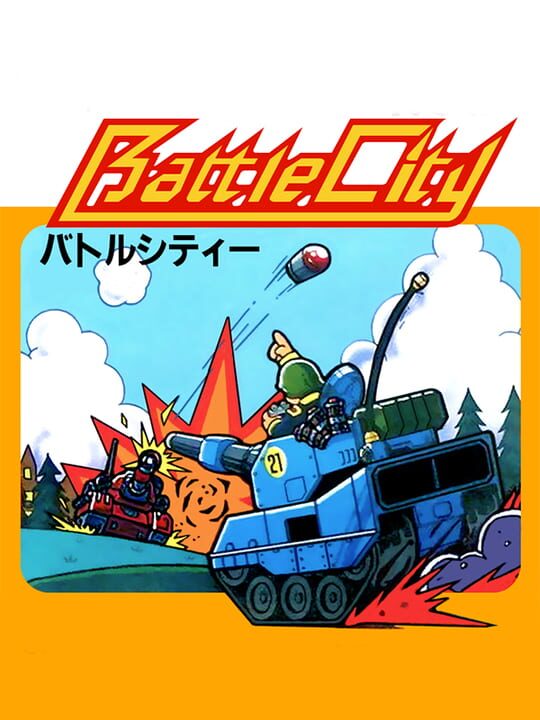
Battle City
Main Game
RELEASED
7.8
Sep 9, 1985
Wii USharp X1+6byNamco•Dempa Shimbunsha
Overview:|
Battle City, a foundational 1985 multi-directional shooter, tasks you with controlling a tank to destroy all enemy armor on the map while defending your central base icon from destruction. The core loop involves navigating grid-based levels, using terrain for cover, and eliminating 20 enemy tanks per stage. Distinctive features include cooperative two-player simultaneous play and an integrated level editor for custom map creation. This main game is available across platforms like the NES and modern systems such as the Wii U.
This foundational title, first released in 1985, is a classic example of the multi-directional shooter genre. As a main game, its core objective centers on intense, strategic tank combat across various maps. Players assume control of a single armored vehicle tasked with eliminating all incoming enemy tanks before they can breach and destroy the player's designated headquarters.
Core Gameplay Mechanics and Objectives
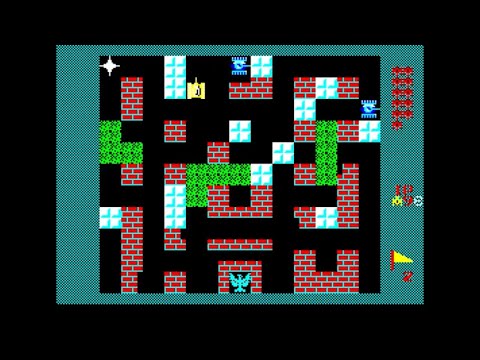
The primary gameplay loop requires navigating a grid-based environment, strategically using cover elements, and engaging enemy armor that spawns from the top of the screen. A level is successfully cleared only after the player destroys all twenty enemy units present on the map. The game concludes immediately if the player's base—visually represented by an eagle or bird icon—is destroyed, or if the player loses all allocated lives.
What makes this shooter challenging?
The central difficulty arises from managing threats approaching from all directions while simultaneously defending the fixed central base. Enemy tanks possess varying speeds and armor ratings, demanding tactical positioning and the intelligent use of the environment. Players must differentiate between destructible barriers (like brick) and indestructible obstacles (like steel) to secure positional advantages. Occasionally, destroying certain enemy types will cause power-ups to appear, temporarily granting enhancements such as increased movement speed or the ability to fire double shots.
Unique Features and Enhancements
This specific iteration of the tank combat experience introduced significant enhancements over earlier arcade versions. A key feature is the capacity for two-player simultaneous play, enabling cooperative defense against the continuous waves of enemy forces. Furthermore, this version includes a robust level edit feature, equipping players with tools to design and construct their own custom battlefields, significantly increasing long-term replayability and strategic depth.
Platform Availability and Content Status
This title has been ported across numerous hardware generations since its debut. Original platforms include the Arcade and the Nintendo Entertainment System (NES). Modern accessibility is maintained through ports available on systems such as the Wii U and Nintendo 3DS. As a complete main game release, there are no currently documented official downloadable content (DLC) packs or standalone expansions associated with this version. No official remakes or remasters have been officially released for this specific iteration.
Which genres define this classic experience?
The game blends elements from the Shooter genre, given the constant firing mechanics, with strategic positioning reminiscent of Puzzle elements, as players must figure out the optimal path and defense strategy for each map layout. While sometimes categorized broadly, the core experience is defined by its fast-paced, top-down armored combat.
Game Details
Primary Name: Battle City
Alternative Names:
Tank (Alternative title)
Боен град (Bulgarian title)
BattleCity (Alternative spelling)
Type: Main Game
Series: Tank Battalion
Developer: Namco
Publisher: Dempa Shimbunsha, Namco, Bandai Namco Entertainment, Bandai Namco Games, Namco Bandai Games
Release Information
Release Date: Sep 9, 1985
Genres & Themes
Genres: Fighting, Shooter, Puzzle
Themes: Action
Platforms
Wii USharp X1Nintendo Entertainment SystemFM-7Nintendo 3DSFamily ComputerArcadeWii
Game Modes
Perspective: Bird view / Isometric
Player Modes: Single-player
Game Modes: Single player, Multiplayer
Age Ratings
CERO:A (All Ages)
CLASS_IND:L (All Ages)

 Soren
Soren