
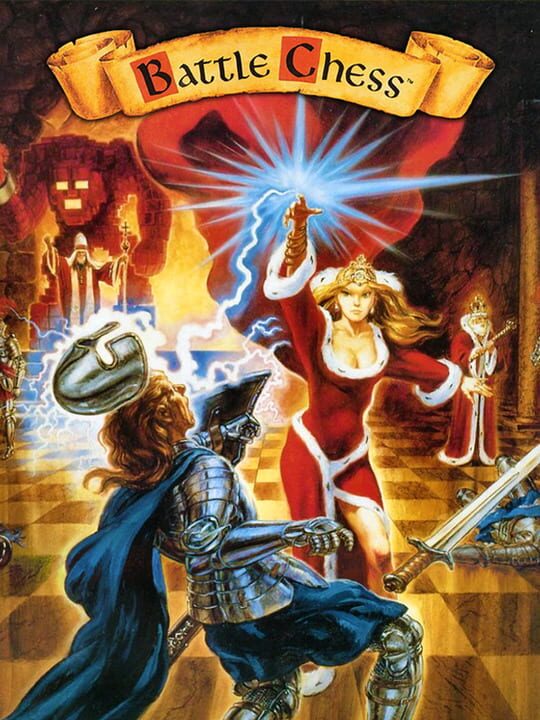
Battle Chess
Main Game
RELEASED
7.1
Oct 1, 1988
DOSCommodore CDTV+12byInterplay•Fujitsu Interactive
Overview:|
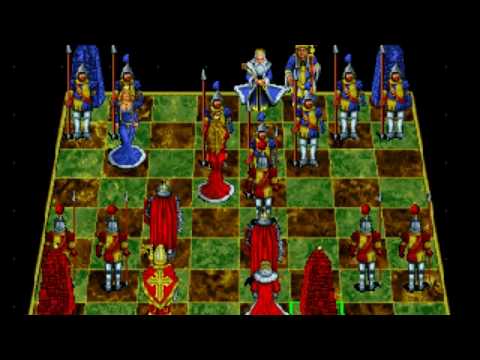
Released in 1988, this title is a classic turn-based strategy and board game that faithfully adapts the rules of chess. Its distinctive feature is the visual presentation: every piece capture triggers a unique, animated combat sequence between the involved figures, making the discovery of these varied animations a core part of the experience. While the original AI opponents were historically noted as weak, the core gameplay loop focuses purely on tactical positioning to achieve checkmate.
This title, first released in 1988, takes the classic, universally recognized board game of chess and infuses it with a distinct visual flair. Functioning as a turn-based strategy game, it adheres strictly to the established rules of chess while introducing a unique presentation layer that sets it apart from standard digital chess simulations.
Core Gameplay and Premise
The fundamental objective remains unchanged: outmaneuver your opponent on the 64-square board to achieve checkmate. As a strategy and turn-based strategy title, success relies entirely on tactical foresight and planning each move several steps ahead. The basic gameplay adheres faithfully to the established rules of the traditional board game.
The game was initially developed for the Amiga platform and subsequently saw wide distribution across numerous systems throughout the late 1980s and early 1990s, including DOS, Commodore 64, Atari ST, and various other computer and multimedia platforms of the era.
What is the defining feature of this chess adaptation?
The most significant departure from traditional digital chess implementations lies in the presentation of captures. Every time a piece takes an opponent's piece, a unique, often elaborate, animated sequence plays out, showcasing the confrontation between the attacking and defending pieces.
Discovery of Unique Animations
A major element of enjoyment for players was the sheer variety of these combat animations. Because different pieces interacting in capture scenarios resulted in distinct visual outcomes, discovering every possible animation combination became an engaging secondary objective alongside winning the match.
Game Availability and History
This main game has seen continued interest over the decades, evidenced by the existence of at least one full remake available on modern platforms, as well as a remaster. It is important to note that the core experience, as originally designed, does not include any downloadable content (DLC) or official expansions.
How strong is the computer opponent?
Historically, one area of noted criticism regarding the original releases concerned the artificial intelligence (AI) opponent. The chess engine in the initial versions was considered relatively weak compared to later developments in chess AI technology that emerged in the mid-1990s.
Game Details
Primary Name: Battle Chess
Alternative Names:
dosbox.exe (Windows Executable)
Type: Main Game
Series: Battle Chess
Developer: Interplay
Publisher: Fujitsu Interactive, Pack-In-Video, Electronic Arts, Dice Multi Media Europe, GameTap Entertainment, Krisalis Software
Release Information
Release Date: Oct 1, 1988
Genres & Themes
Genres: Strategy, Turn-based strategy (TBS), Card & Board Game
Themes: Fantasy, Historical
Platforms
DOSCommodore CDTVPC (Microsoft Windows)PC-9800 SeriesApple IIGSAcorn ArchimedesCommodore C64/128/MAXFM TownsSharp X68000Amiga CD323DO Interactive MultiplayerAmigaAtari ST/STEApple II
Game Modes
Perspective: Third person
Player Modes: Single-player
Game Modes: Single player, Multiplayer

 Soren
Soren