
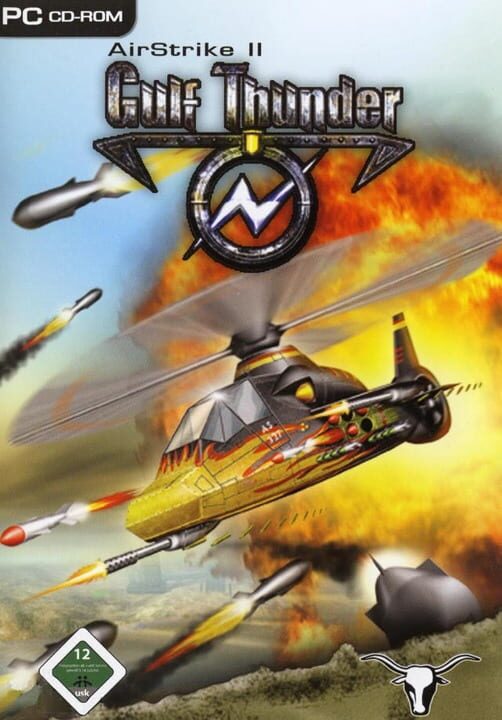
Airstrike II: Gulf Thunder
Main Game
RELEASED
Feb 11, 2005
PC (Microsoft Windows)byDivoGames•Toro-Publishing
Overview:|
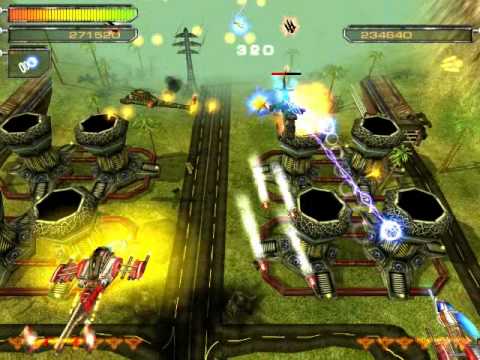
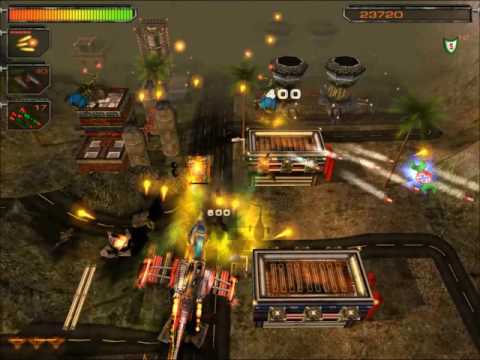
As a top-down third-person helicopter shooter released in 2005, Airstrike II: Gulf Thunder focuses on arcade action where your main goal is survival and maximizing your score across various missions. You pilot your aircraft, engaging enemies from an overhead view, with progression unlocking new helicopters that force you to balance speed against armor protection. This main game offers a straightforward, reflex-based aerial combat experience for PC players.
This is a fast-paced, top-down third-person shooter released in 2005 for the PC (Microsoft Windows) platform. The core experience centers around intense aerial combat, placing the player in command of a helicopter tasked with navigating various missions. The atmosphere is focused purely on arcade action, demanding quick reflexes and precise maneuvering to survive the onslaught of enemy forces.
Core Gameplay Mechanics and Objective
The primary gameplay loop in this title is straightforward: survive the mission objectives while maximizing destruction. Players pilot their aircraft from a top-down perspective, engaging waves of enemies using various onboard weaponry. Success is directly tied to score accumulation, encouraging aggressive play and high-kill counts throughout each stage.
A key strategic element involves the selection and management of available aircraft. Players gain access to different helicopters as they progress. These choices present a trade-off system where pilots must balance speed against durability. Some choppers offer superior agility but possess less armor, requiring a different approach to combat compared to heavily armored, slower variants.
What is the setting and atmosphere of this title?
While specific narrative details are not extensively detailed, the title suggests a military conflict setting, likely involving aerial engagements over a region reminiscent of the Gulf theater. The atmosphere is built around constant action, relying on arcade sensibilities rather than deep simulation or complex storytelling.
Available Content and Game Structure
This release functions as a standalone main game. There are no officially listed downloadable content packs (DLCs) or expansions available for this title, meaning the entire experience is contained within the initial 2005 release.
How does this game handle progression?
Progression is tied directly to mission completion and performance. As players successfully navigate missions and achieve high scores, they unlock access to the next tier of available helicopters. This system directly influences the player's tactical options for subsequent challenges, forcing adaptation to new aircraft capabilities.
Game Details
Primary Name: Airstrike II: Gulf Thunder
Type: Main Game
Series: Airstrike
Developer: DivoGames
Publisher: Toro-Publishing, DivoGames
Release Information
Release Date: Feb 11, 2005
Genres & Themes
Genres: Shooter, Arcade
Themes: Action, Comedy
Platforms
PC (Microsoft Windows)
Game Modes
Perspective: Third person
Player Modes: Single-player
Game Modes: Single player, Co-operative
 Soren
Soren