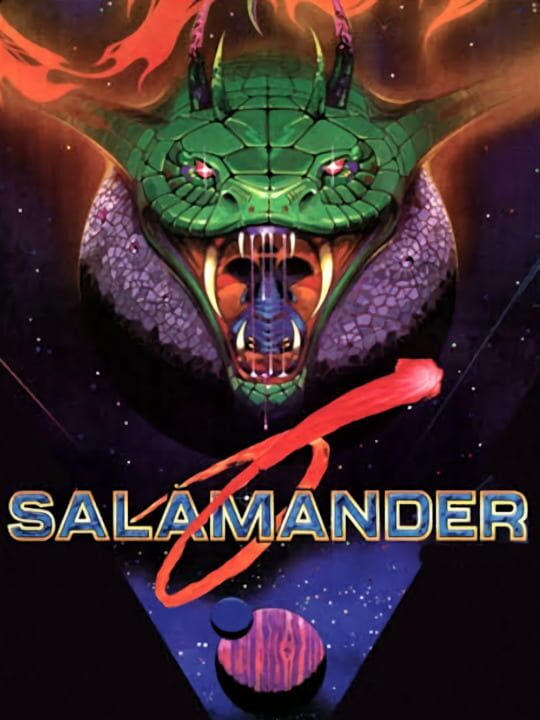
Salamander
Main Game
RELEASED
7.0
4 de jul. de 1986
Sharp X68000ArcadebyKonami
Visão Geral:|
{"overview":"
Salamander é um clássico jogo de tiro (shooter) de arcade, lançado em 1986, focado em combate aéreo intenso. A jogabilidade central envolve pilotar uma nave através de fases que alternam dinamicamente entre rolagem horizontal e vertical, exigindo adaptação constante. Uma característica notável é o seu sistema de power-up simplificado e a inclusão de modo cooperativo para dois jogadores. Este título é fundamentalmente uma experiência arcade pura, sem conteúdo adicional recente.
","tokens":{"input":1931,"output":110,"total":2041}}{"overview":"
\n
\n\nEste é um clássico jogo de tiro (shooter) de rolagem que chegou aos arcades originalmente em 1986, trazendo ação intensa para plataformas como o Sharp X68000. Como um título principal do gênero arcade shooter, ele oferece combates aéreos de alta velocidade através de cenários variados.
\nMecânicas Centrais e Jogabilidade
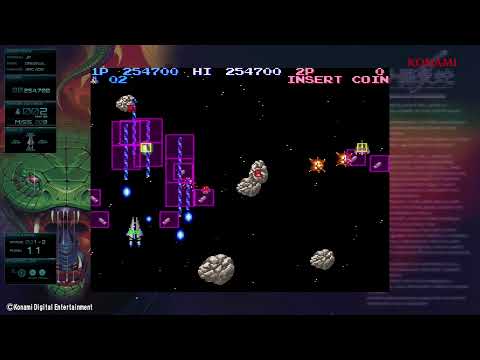
\nA experiência principal gira em torno de pilotar uma nave espacial altamente customizável através de ondas contínuas de forças inimigas. Os jogadores precisam navegar por fases que mudam dinamicamente entre as perspetivas de rolagem horizontal e vertical, exigindo adaptação constante no movimento e na estratégia de tiro.
\n\nUma característica marcante deste título é a sua abordagem aos aprimoramentos de poder. Em comparação com outros jogos do género, ele apresenta um sistema de power-up simplificado, otimizando o processo de melhoria das capacidades da sua nave, ao mesmo tempo que mantém a profundidade necessária no combate.
\n\nFuncionalidade Cooperativa
\nQual é a principal forma de desfrutar deste jogo?
\nUm elemento significativo da jogabilidade é a inclusão do modo cooperativo para dois jogadores. Isto permite que dois pilotos se unam simultaneamente, coordenando ataques e defesas contra a implacável ofensiva inimiga, adicionando uma camada de trabalho em equipa ao desafio arcade.
\n\nVariedade e Design das Fases
\nO jogo é estruturado em torno de fases distintas que alternam a direção da rolagem. Esta escolha de design garante que os jogadores não possam depender de um único padrão de movimento, forçando-os a dominar tanto as manobras de rolagem lateral quanto os padrões de ascensão/descida vertical.
\n\nLegado e Conteúdo
\nMuitas das inovações mecânicas introduzidas aqui, particularmente as fases com rolagem alternada e a estrutura de power-ups otimizada, tornaram-se mais tarde elementos fundamentais adotados por entradas subsequentes em franquias de tiro relacionadas.
\n\nO que define a sua estrutura de conteúdo?
\nSendo um título arcade principal lançado em 1986, este jogo mantém o foco na sua experiência central. Atualmente, não existem pacotes de conteúdo para download (DLCs) ou expansões associadas a esta versão específica.
","tokens":{"input":2123,"output":566,"total":2689}}Game Details
Primary Name: Salamander
Alternative Names:
沙羅曼蛇 (Chinese title - simplified)
Type: Main Game
Series: Salamander
Developer: Konami
Publisher: Konami
Release Information
Release Date: jul. 4, 1986
Genres & Themes
Genres: Shooter, Arcade
Themes: Action, Science fiction
Platforms
Sharp X68000Arcade
Game Modes
Perspective: Side view
Player Modes: Offline Co-op, Campaign Co-op, Split Screen, Multiplayer
Game Modes: Single player, Co-operative, Split screen
Age Ratings
ESRB:E (Everyone)
CERO:A (All Ages)
 Soren
Soren