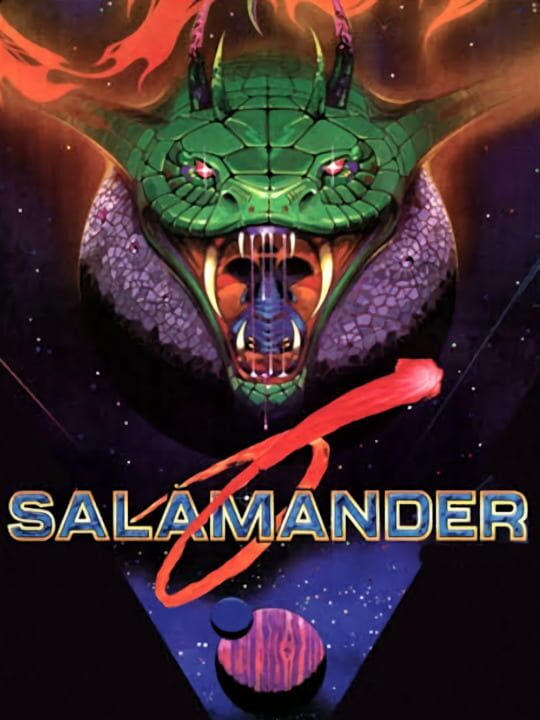
Salamander
Main Game
RELEASED
7.0
4 lip 1986
Sharp X68000ArcadebyKonami
Przegląd:|
{"overview":"
Salamander to klasyczna zręcznościowa strzelanka typu 'scrolling shooter' z 1986 roku, w której pilotujesz statek kosmiczny. Kluczową cechą jest dynamiczna zmiana perspektywy – poziomy przewijają się zarówno w poziomie, jak i w pionie. Gra oferuje uproszczony system ulepszeń oraz możliwość rozgrywki kooperacyjnej dla dwóch graczy. Jest to tytuł skupiony na czystej akcji, który wprowadził mechaniki później zaadaptowane w gatunku.
","tokens":{"input":1937,"output":127,"total":2064}}{"overview":"
\n
\n\nJest to klasyczna strzelanka zręcznościowa, która zadebiutowała w 1986 roku, dostarczając intensywnej akcji na platformy takie jak Sharp X68000 oraz automaty arcade. Jako główna gra z gatunku shooter, oferuje dynamiczną walkę powietrzną w zróżnicowanych środowiskach.
\nPodstawowa Rozgrywka i Mechaniki
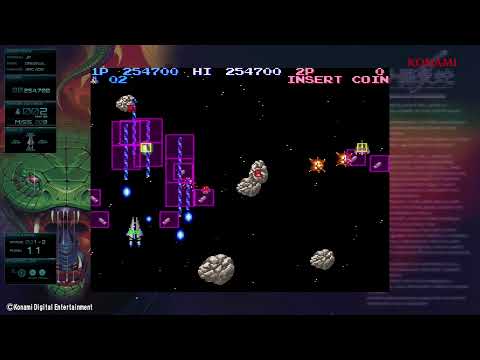
\nCentralnym elementem doświadczenia jest sterowanie zaawansowanym statkiem kosmicznym, który musi przedzierać się przez kolejne fale przeciwników. Gracze nawigują przez poziomy, które dynamicznie zmieniają perspektywę przewijania – niektóre sekcje są poziomo przewijane, a inne pionowo, co wymaga ciągłego dostosowywania strategii ruchu.
\n\nCharakterystyczną cechą tego tytułu jest podejście do ulepszeń. W porównaniu do innych gier tego gatunku, gra wprowadza uproszczony system ulepszeń (power-upów), co usprawnia proces wzmacniania możliwości statku, jednocześnie zachowując głębię w aspekcie walki.
\n\nTryb Kooperacji
\nJaki jest główny sposób na doświadczenie tej gry?
\nIstotnym elementem rozgrywki jest możliwość dwuosobowej gry kooperacyjnej. Pozwala to dwóm pilotom na jednoczesne łączenie sił, koordynowanie ataków i obrony przed nieustannym naporem wrogów, dodając warstwę współpracy do klasycznego wyzwania arcade.
\n\nRóżnorodność i Projekt Poziomów
\nGra jest zbudowana wokół wyraźnie zdefiniowanych etapów, które naprzemiennie zmieniają kierunek przewijania. Ta decyzja projektowa wymusza na graczach opanowanie zarówno manewrów bocznych, jak i wzlotów/opadów w pionie, uniemożliwiając poleganie na jednym schemacie ruchu.
\n\nDziedzictwo i Stan Gry
\nWiele innowacji mechanicznych wprowadzonych w tym tytule, zwłaszcza naprzemienne etapy przewijania i uproszczona struktura ulepszeń, stało się później fundamentalnymi elementami adoptowanymi przez kolejne odsłony powiązanych serii strzelanek.
\n\nJako główny tytuł arcade wydany w 1986 roku, gra koncentruje się na swoim pierwotnym doświadczeniu. Obecnie nie są dostępne żadne dodatki DLC ani pakiety rozszerzeń związane z tym wydaniem.
","tokens":{"input":2127,"output":648,"total":2775}}Game Details
Primary Name: Salamander
Alternative Names:
沙羅曼蛇 (Chinese title - simplified)
Type: Main Game
Series: Salamander
Developer: Konami
Publisher: Konami
Release Information
Release Date: lip 4, 1986
Genres & Themes
Genres: Shooter, Arcade
Themes: Action, Science fiction
Platforms
Sharp X68000Arcade
Game Modes
Perspective: Side view
Player Modes: Offline Co-op, Campaign Co-op, Split Screen, Multiplayer
Game Modes: Single player, Co-operative, Split screen
Age Ratings
ESRB:E (Everyone)
CERO:A (All Ages)

 Soren
Soren