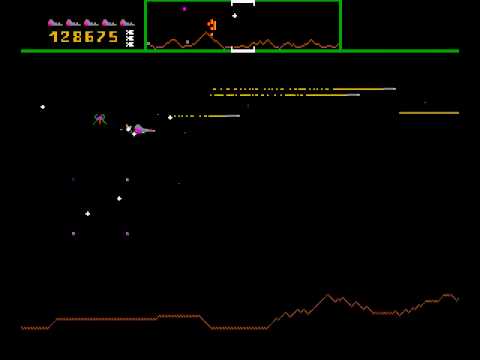
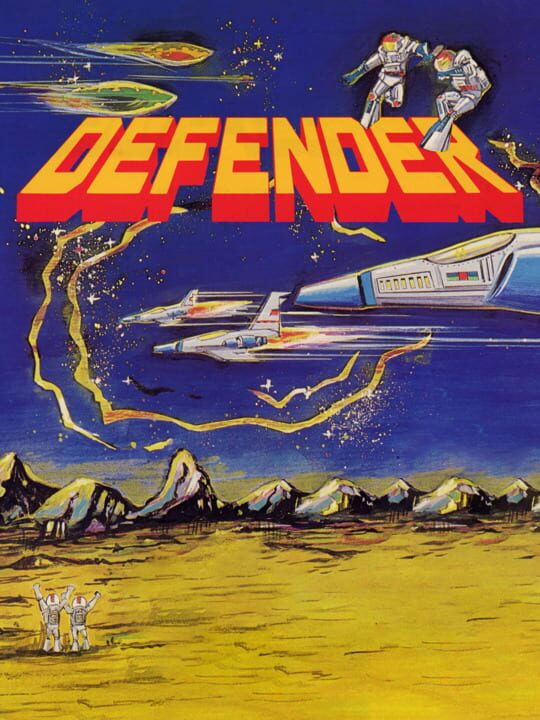
1981年にアーケードで登場したシューティング・ストラテジーゲームです。プレイヤーは宇宙船を操り、エイリアン「マンティ」とその一族から、異星の地で捕らえられそうな人間を守り抜くことが目的です。敵は人間を誘拐すると強化されるため、単なる撃ち合いだけでなく、防衛と救出という二重のミッションが求められます。絶え間ない攻撃の中で、精密な操作と迅速な判断力が試される、高い難易度で知られる作品です。現在、MacやWebブラウザでもプレイ可能です。
","tokens":{"input":2336,"output":136,"total":2472}}1981年にアーケード向けにリリースされた、2Dシューティングとストラテジーの要素を併せ持つ古典的なタイトルです。Macやウェブブラウザなど、複数のプラットフォームでプレイ可能です。プレイヤーは未来の地球を防衛するスターファイターとなり、架空の惑星を舞台に侵略してくるエイリアン種族「マンティ」とその一族「イラータ」から人類を守る任務を負います。
\n物語の核心は、これらのエイリアンが人間を誘拐している点にあります。誘拐された人間はエイリアンの力を増強させ、最終的に地球を圧倒する「究極のミュータントアーミー」を形成する恐れがあるため、阻止が急務となります。
\nゲームプレイの核は、激しいペースの戦闘と、重要なリソース管理にあります。プレイヤーはスクロールする2次元の環境を移動しながら、次々と現れる敵の波状攻撃を撃退します。
\n中心的なメカニクスは、マップ上に散らばる救出対象の宇宙飛行士(人間)の保護です。エイリアンが人間を捕獲すると、そのエイリアンは著しく強化され、プレイヤーにとってより危険な存在となります。プレイヤーの宇宙船には標準の武装が備わっていますが、成功の鍵は、敵への攻撃と、人間という脆弱な資源の防衛とのバランスを取る戦略的な移動にあります。
\n絶え間ない脅威の中で、複数の方向から迫る敵に対して常に注意を払い続けることが求められます。
\n\nこのゲームの際立った魅力は、積極的なエイリアン排除と時間的制約のある人命救助という二重の目標にあります。絶え間ない攻撃を受けながら、保護すべき貴重な資源を維持しなければならないという要素が、当時のシンプルなシューティングゲームとは一線を画しています。その難易度の高さはしばしば指摘されており、捕獲される人間が増えるにつれて増大する脅威レベルを管理するためには、精密な操作と迅速な意思決定が不可欠です。
\n\n雰囲気は、圧倒的な異星の脅威に対する、未来における絶望的な防衛戦を描いています。遠い惑星を舞台に、マンティとイラータの勢力とのハイステークスな衝突が、そのビジュアル表現によって支えられています。
\n\nメインゲームとして、現在このバージョンに関連付けられた公式のダウンロードコンテンツ(DLC)や拡張パックは確認されていません。初期リリース以降、このタイトルには1つの公式リメイクが存在します。
","tokens":{"input":2528,"output":650,"total":3178}}

Defender put players in charge of a ship sent to protect mankind from wave after wave of attacking alien forces. Armed with smart bombs and the ability to use hyperspace to move quickly around the planet, the player ship must fight against Bombers, Pods, Swarmers, Baiters, and Landers - that can capture the humanoids and transform them into deadly and relentless Mutants. Fail to save the humanoids from freefall or Mutant transformation, and the planet is destroyed. Defender is a port with modern enhancements of the original 1981 arcade title released on Xbox Live Arcade on November 15th, 2006. On February 17th, 2010 Larry “Major Nelson” Hryb announced on Twitter that nine Midway Games had been removed from Xbox Live “due to publisher evolving rights and permissions”.

Defender is an updated version of the classic arcade game of the same name. The Manti bugs have invaded earth and the remaining human survivors now live in colonies throughout the solar system. As more swarms of Manti arrive, even the colonies are now in danger of being wiped out. You've been enlisted to help save the remaining colonists and destroy the Manti bugs! There are a total of six different ships to fly, each with its own flight characteristics and special weapons. Weapon and shield power-ups can also be found throughout the various missions. As in the original version of Defender, the Manti will try to capture any humans they can find to change them into mutants to increase their attack force. To increase chances of success you will need to rescue captured humans before this happens and bring them to a safe landing zone. Saving colonists will also earn you some credits, which can later be used to buy improved weapons or shields for your ship. Also included are several video extras detailing the historical perspective of and the making of Defender.

Game Boy Color port of Defender, released alongside Joust.

A keychain port of Defender.

Game Boy port of Defender, released alongside Joust.


Defender is a 1981 horizontally scrolling shooter video game developed by Williams Electronics for arcades. The game is set on either an unnamed planet or city (depending on platform) where the player must defeat waves of invading aliens while protecting astronauts. Development was led by Eugene Jarvis, a pinball programmer at Williams; Defender was Jarvis's first video game project and drew inspiration from Space Invaders and Asteroids. Defender was demonstrated in late 1980 and was released in March 1981. It was distributed in Japan by Taito. Defender was one of the most important titles of the golden age of arcade video games, selling over 55,000 units to become the company's best-selling game and one of the highest-grossing arcade games ever. Praise among critics focused on the game's audio-visuals and gameplay. It is frequently listed as one of Jarvis's best contributions to the video game industry and one of the most difficult video games. Though not the first game to scroll horizontally, it created the genre of horizontal scrolling shoot 'em ups. It inspired the development of other games and was followed by sequels and many imitations. Ports were developed for contemporary game systems, most of them by either Atari, Inc. or its software label for non-Atari platforms, Atarisoft. The 1982 Atari 2600 version was one of the best-selling games for the system and sold over 3 million cartridges. source: Wikipedia