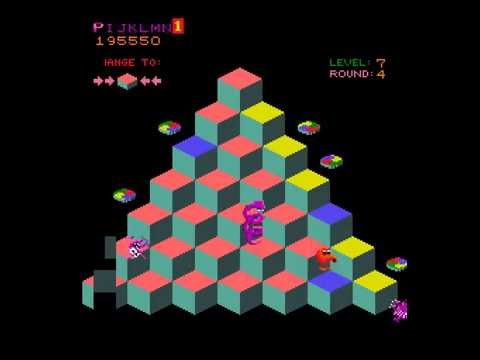
Q*bert on klassinen 1980-luvun pulma-arkadipeli, jossa ohjaat hahmoa vaihtamaan kuutiopyramidin kaikkien palikoiden väriä hyppimällä niiden päällä. Peli hyödyntää isometristä grafiikkaa luodakseen illuusion 3D-tilasta. Tavoitteena on välttää jatkuvasti jahtaavia vihollisia. Pelissä ei ole syvällistä tarinaa, vaan se keskittyy puhtaasti liikkumismekaniikan hallintaan ja haasteisiin. Peli on saatavilla muun muassa Arcade- ja PlayStation 3 -alustoille.
","tokens":{"input":2189,"output":162,"total":2351}}Liikkuminen tapahtuu suuntaperusteisilla hypyillä. Vaikka tavoite on yksinkertainen – muuttaa kaikki värit – haaste kasvaa nopeasti erilaisten vihollisolentojen ilmestyessä, jotka partioivat rakennetta.
\n\nPeli on tunnettu isometristen grafiikoiden käytöstä, jolla luodaan illuusio kolmiulotteisesta tilasta kaksiulotteisella tasolla. Tämä visuaalinen tyyli, joka muistuttaa esimerkiksi Penrosen portaita, määritteli sen ulkoasun ja tuntuman, erottaen sen aikansa sivuttain vierivistä tasohyppelypeleistä. Se toimii pohjimmiltaan pulmapelinä, jossa tilan hahmottaminen ja ajoitus ovat elintärkeitä selviytymisen kannalta.
\n\nJotta pelaaja ei voisi helposti suorittaa tehtäväänsä, peliin on tuotu erilaisia vihollisia. Nämä olennot jahtaavat aktiivisesti pelaajahahmoa kuutioiden pinnoilla. Keskeinen jännite syntyy näiden uhkien välttelystä tai neutraloinnista samalla kun edetään värien muuttamisessa.
\n\nPeliin liittyy suoraviivainen lähtökohta ilman syvällistä tarinankerrontaa, mikä on tyypillistä sen kolikkopelialkuperälle. Painopiste pysyy liikkumismekaniikkojen hallinnassa ja vihamielisten entiteettien yhä monimutkaisempien kuvioiden selviytymisessä.
\n\nKoska kyseessä on klassinen kolikkopeli, tähän pääpeliin ei ole julkaistu ladattavaa sisältöä (DLC) tai virallisia laajennuksia tässä versiossa. Kuitenkin konseptin kestävä suosio on johtanut useisiin myöhempiin uusintaversioihin vuosien varrella.
\n\nTämän pelin alkuperäinen iteraatio julkaistiin pelihalleihin. Nykyaikainen saavutettavuus sisältää porttauksia alustoille, kuten PlayStation 3.
","tokens":{"input":2381,"output":862,"total":3243}}
One of the most critically acclaimed and commercially successful arcade games of the 1980s is back in its Classic pixel perfect 2D form, and a re-imagined Reboot version with state of the art 3D game-play and graphics that remain faithful to the original concept.

Q*bert is a remake of the arcade game of the same name with three-dimensional (3D) graphics. It was developed by Artech Studios and released by Hasbro Interactive on the PlayStation and PC in 1999 and on the Dreamcast in 2000. Q*bert has 3 modes of play. Classic is like the original Q*bert, and the graphics can be changed from Retro to Modern. The Adventure mode takes Q*bert to 3D dimensions, and contains power ups and all new characters set in 4 worlds. Head to Head is a multiplayer mode.

Q*bert for Game Boy brings new challenges to the classic series.

NES port of Q*Bert.

Q*bert is a MSX game developed by Konami in 1986. Despite sharing the same name as the original, it has gameplay styled after Q*bert's Qubes. the title character being replaced by Wrappy (konami MSX research team mascot) that has draconic appearance with small eyes, a visible, expressive mouth, arms, purple skin, yellow spines, and a somewhat long tail.

Q*bert is an isometric platform game with puzzle elements where the player controls the titular protagonist from a third-person perspective. Q*bert starts each game at the top of a pyramid of cubes, and moves by jumping diagonally from cube to cube. Landing on a cube causes it to change color, and changing every cube to the target color allows the player to progress to the next stage.

Q*bert is an isometric platform game with puzzle elements where the player controls the titular protagonist from a third-person perspective. Q*bert starts each game at the top of a pyramid of cubes, and moves by jumping diagonally from cube to cube. Landing on a cube causes it to change color, and changing every cube to the target color allows the player to progress to the next stage.

Q*bert is an arcade game by Gottlieb. It was ported to the SG-1000 by Tsukuda Original, who marketed it for their Othello Multivision console. The objective of the game is to turn all the cubes on screen to a desired colour by moving Q*bert on top of them. Q*bert can only move in diagonals, and the player needs to be careful not to either send Q*bert off the edge or have him collide with enemies/obstacles. Occasionally cylindrical platforms appear on the edge of the screen, which when jumped on, will take Q*bert to the top. The SG-1000 port is a very bare-bones rendition of the game and is missing many elements seen in the arcade version. It is also much harder as the port sends out more enemies in the first few levels.

A handheld conversion of Q*Bert arcade game.

Q*bert is an isometric platform game with puzzle elements where the player controls the titular protagonist from a third-person perspective. Q*bert starts each game at the top of a pyramid of cubes, and moves by jumping diagonally from cube to cube. Landing on a cube causes it to change color, and changing every cube to the target color allows the player to progress to the next stage.

Q*bert is an isometric platform game with puzzle elements where the player controls the titular protagonist from a third-person perspective. Q*bert starts each game at the top of a pyramid of cubes, and moves by jumping diagonally from cube to cube. Landing on a cube causes it to change color, and changing every cube to the target color allows the player to progress to the next stage.

A handheld conversion of Q*Bert arcade game.

Q*bert is an isometric platform game with puzzle elements where the player controls the titular protagonist from a third-person perspective. Q*bert starts each game at the top of a pyramid of cubes, and moves by jumping diagonally from cube to cube. Landing on a cube causes it to change color, and changing every cube to the target color allows the player to progress to the next stage.

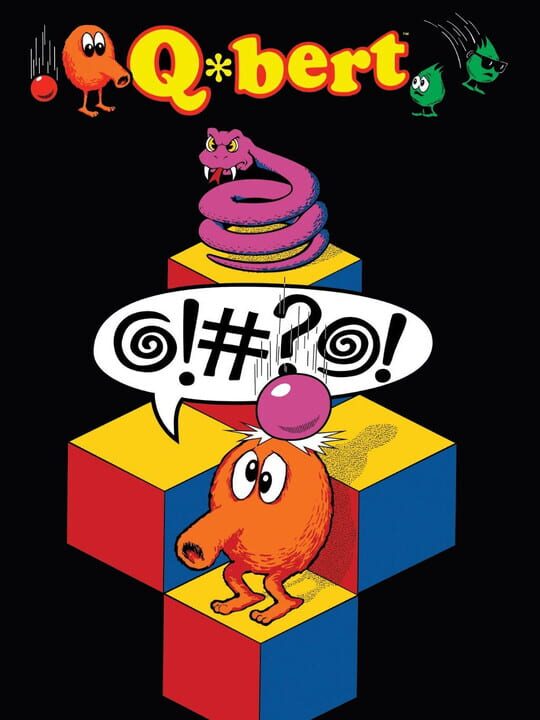
Q*bert is a popular arcade game. The goal is to change all of the tiles on a pyramid to the target color. To do this you guide Q*bert around the pyramid, and every tile he hops on will change color. On early levels, a single hop will change the tile to the desired color, but on later levels, you may need to hop on a tile multiple times or even avoid hopping on a tile multiple times! Trying to stop Q*bert are many different creatures wandering around the board, including Coily the snake, Slick and Sam, and falling balls. On the edge of the board are floating discs; if Q*bert jumps on one of these discs when the snake is in pursuit, the snake will fall off the board while Q*bert is safely transported to the top.

Q*bert is a popular arcade game. The goal is to change all of the tiles on a pyramid to the target color. To do this you guide Q*bert around the pyramid, and every tile he hops on will change color. On early levels, a single hop will change the tile to the desired color, but on later levels you may need to hop on a tile multiple times or even avoid hopping on a tile multiple times! Trying to stop Q*bert are many different creatures which wander around the board, including Coily the snake, Slick and Sam, and falling balls. On the edge of the board are floating discs; if Q*bert jumps on one of these discs when the snake is in pursuit, the snake will fall off the board while Q*bert is safely transported to the top.

A handheld conversion of Gottlieb's Q*Bert arcade game.

All the action and excitement of the popular arcade game are here! Hop Q*bert up and down a pyramid of cubes, changing colors on each of the cube tops. When they're all the same color, Q*bert moves to a new - and more difficult - pyramid. But strange characters want to stop Q*bert from his fanciful mission. You'll have to do some fast hopping in this quick and "quasy" game! 1 or 2 players.

Q*bert is an isometric platform game with puzzle elements where the player controls the titular protagonist from a third-person perspective. Q*bert starts each game at the top of a pyramid of cubes, and moves by jumping diagonally from cube to cube. Landing on a cube causes it to change color, and changing every cube to the target color allows the player to progress to the next stage.