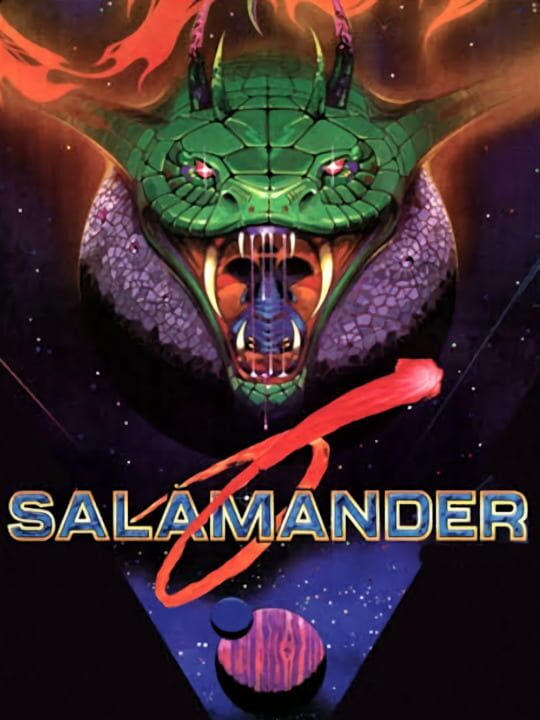
Salamander
Main Game
RELEASED
7.0
4. Juli 1986
Sharp X68000ArcadebyKonami
Übersicht:|
{"overview":"
Salamander ist ein klassischer Arcade-Shooter aus dem Jahr 1986, bei dem Sie ein Raumschiff durch wechselnde horizontal und vertikal scrollende Level steuern. Das Spiel zeichnet sich durch ein vereinfachtes Power-up-System und die Möglichkeit zum Zweispieler-Koop-Modus aus. Es bietet intensive Action und legte mechanische Grundlagen, die später in anderen Shootern übernommen wurden.
","tokens":{"input":1925,"output":95,"total":2020}}{"overview":"
\n
\n\nDieses Spiel ist ein klassischer Arcade-Shooter, der ursprünglich im Jahr 1986 für Arcade-Automaten und später für den Sharp X68000 veröffentlicht wurde. Als Haupttitel im Shooter-Genre bietet es intensive Luftkampf-Action über abwechslungsreichen Umgebungen.
\nKern-Gameplay und Mechaniken
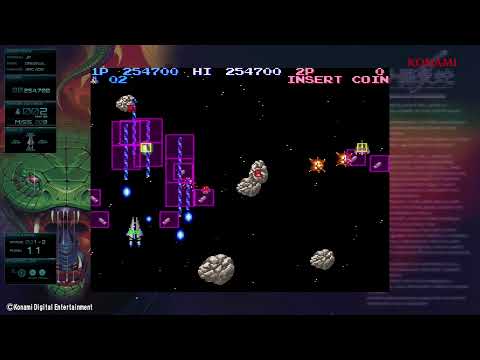
\nDas zentrale Spielerlebnis dreht sich darum, ein hochmanövrierfähiges Raumschiff durch Wellen feindlicher Streitkräfte zu steuern. Spieler navigieren durch Level, die dynamisch zwischen horizontaler und vertikaler Scroll-Perspektive wechseln. Dies erfordert eine ständige Anpassung der Bewegung und Strategie.
\n\nEin definierendes Merkmal dieses Titels ist sein Ansatz bei den Power-Ups. Im Vergleich zu anderen Spielen dieses Genres verfügt es über ein vereinfachtes Power-Up-System, das den Prozess der Verbesserung der Fähigkeiten des Schiffes strafft, während die Tiefe im Kampf erhalten bleibt.
\n\nKooperativer Spielmodus
\nWas ist die primäre Art, dieses Spiel zu erleben?
\nEin wesentliches Element des Gameplays ist die Einbeziehung eines Zwei-Spieler-Koop-Modus. Dieser ermöglicht es zwei Piloten, gleichzeitig zusammenzuarbeiten, Angriffe und Verteidigungen gegen den unerbittlichen Ansturm der Feinde zu koordinieren und dem Arcade-Herausforderung eine Ebene der Teamarbeit hinzuzufügen.
\n\nLevel-Vielfalt und Design
\nDas Spiel ist in unterschiedliche Stufen unterteilt, deren Scroll-Richtung wechselt. Diese Designentscheidung verhindert, dass sich Spieler auf ein einziges Bewegungsmuster verlassen können, und zwingt sie dazu, sowohl seitliche Scroll-Manöver als auch vertikale Auf- und Abwärtsmuster zu meistern.
\n\nInhaltsverfügbarkeit
\nAls Haupttitel, der 1986 in den Arcade-Hallen erschien, konzentriert sich dieses Spiel auf sein Kernerlebnis. Es sind derzeit keine herunterladbaren Inhalte oder Erweiterungen mit dieser spezifischen Veröffentlichung verbunden.
\n\nWas definiert sein Erbe im Genre?
\nViele der hier eingeführten mechanischen Innovationen, insbesondere die wechselnden Scroll-Phasen und die optimierte Power-Up-Struktur, wurden später zu grundlegenden Elementen, die in nachfolgenden Titeln verwandter Shooter-Reihen übernommen wurden.
","tokens":{"input":2117,"output":579,"total":2696}}Game Details
Primary Name: Salamander
Alternative Names:
沙羅曼蛇 (Chinese title - simplified)
Type: Main Game
Series: Salamander
Developer: Konami
Publisher: Konami
Release Information
Release Date: Juli 4, 1986
Genres & Themes
Genres: Shooter, Arcade
Themes: Action, Science fiction
Platforms
Sharp X68000Arcade
Game Modes
Perspective: Side view
Player Modes: Offline Co-op, Campaign Co-op, Split Screen, Multiplayer
Game Modes: Single player, Co-operative, Split screen
Age Ratings
ESRB:E (Everyone)
CERO:A (All Ages)

 Soren
Soren