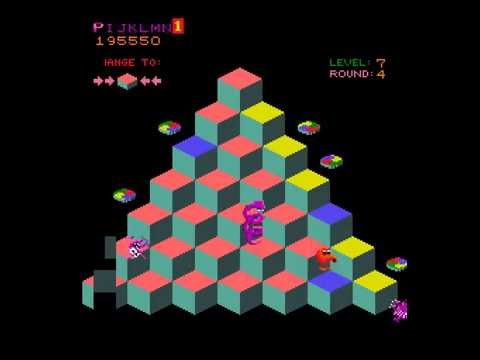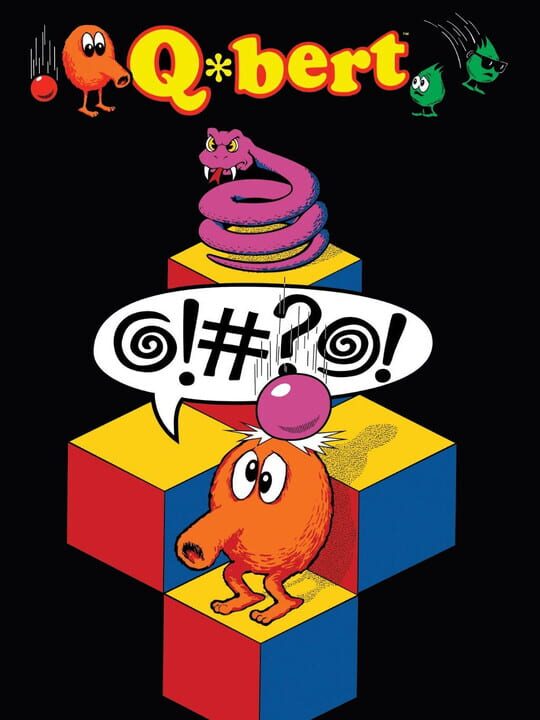
Als Arcade-Klassiker von 1982 ist Q*bert ein isometrischer Puzzle-Platformer, bei dem Sie die Spielfigur über eine Würfelpyramide steuern, um jede Fläche umzufärben. Das Gameplay erfordert präzises Springen, um Feinde zu meiden, die versuchen, Sie aufzuhalten. Das Spiel etablierte die isometrische Grafik zur Darstellung pseudo-dreidimensionaler Räume und konzentriert sich auf das Meistern von Bewegung und Mustererkennung, ohne eine tiefgehende Story zu bieten. Es ist auf Plattformen wie der Arcade und PlayStation 3 verfügbar.
","tokens":{"input":2152,"output":142,"total":2294}}Die Bewegung wird durch gerichtete Sprünge ausgeführt. Während das Ziel einfach ist – alle Farben ändern –, steigert sich die Herausforderung schnell durch die Einführung verschiedener gegnerischer Entitäten, die die Struktur patrouillieren.
\n\nDas Spiel zeichnet sich durch die Verwendung isometrischer Grafiken aus, um die Illusion eines dreidimensionalen Raumes auf einer zweidimensionalen Ebene zu erzeugen. Dieser visuelle Stil, der an Konzepte wie die Penrose-Treppe erinnert, definierte sein Erscheinungsbild und Gefühl und hob es von zeitgenössischen Side-Scrolling-Plattformern ab. Es funktioniert im Grunde als Puzzlespiel, bei dem räumliches Vorstellungsvermögen und Timing für das Überleben entscheidend sind.
\n\nUm zu verhindern, dass der Spieler das Ziel leicht erreicht, werden verschiedene Arten von Feinden eingeführt. Diese Kreaturen verfolgen die Spielfigur aktiv über die Würfelflächen. Das erfolgreiche Ausweichen oder Neutralisieren dieser Bedrohungen bei gleichzeitiger Aufrechterhaltung des Fortschritts bei der Farbänderungsaufgabe bildet die zentrale Spannung des Erlebnisses.
\n\nDas Spiel weist eine unkomplizierte Prämisse ohne tiefgreifende narrative Struktur auf, was typisch für seine Arcade-Ursprünge ist. Der Fokus liegt vollständig auf der Beherrschung der Bewegungsmechaniken und dem Überleben der zunehmend komplexen Muster der feindlichen Einheiten.
\n\nAls klassischer Arcade-Titel verfügt dieses Hauptspiel über keine offiziell veröffentlichten herunterladbaren Inhalte (DLC) oder Erweiterungen für diese Version. Die anhaltende Beliebtheit des Konzepts hat jedoch im Laufe der Jahre zu mehreren Neuauflagen geführt.
\n\nDie ursprüngliche Iteration dieses Spiels wurde für Arcade-Automaten veröffentlicht. Moderne Zugänglichkeit umfasst Ports, die auf Plattformen wie der PlayStation 3 verfügbar sind.
\n\nDie Community schätzt das Spiel heute vor allem für seine historische Bedeutung als Vorläufer des isometrischen Plattformer-Genres. Die jüngsten Neuauflagen konzentrieren sich darauf, die ursprüngliche Mechanik beizubehalten, während sie die Steuerung für moderne Controller optimieren.
","tokens":{"input":2342,"output":775,"total":3117}}
One of the most critically acclaimed and commercially successful arcade games of the 1980s is back in its Classic pixel perfect 2D form, and a re-imagined Reboot version with state of the art 3D game-play and graphics that remain faithful to the original concept.

Q*bert is a remake of the arcade game of the same name with three-dimensional (3D) graphics. It was developed by Artech Studios and released by Hasbro Interactive on the PlayStation and PC in 1999 and on the Dreamcast in 2000. Q*bert has 3 modes of play. Classic is like the original Q*bert, and the graphics can be changed from Retro to Modern. The Adventure mode takes Q*bert to 3D dimensions, and contains power ups and all new characters set in 4 worlds. Head to Head is a multiplayer mode.

Q*bert for Game Boy brings new challenges to the classic series.

NES port of Q*Bert.

Q*bert is a MSX game developed by Konami in 1986. Despite sharing the same name as the original, it has gameplay styled after Q*bert's Qubes. the title character being replaced by Wrappy (konami MSX research team mascot) that has draconic appearance with small eyes, a visible, expressive mouth, arms, purple skin, yellow spines, and a somewhat long tail.

Q*bert is an isometric platform game with puzzle elements where the player controls the titular protagonist from a third-person perspective. Q*bert starts each game at the top of a pyramid of cubes, and moves by jumping diagonally from cube to cube. Landing on a cube causes it to change color, and changing every cube to the target color allows the player to progress to the next stage.

Q*bert is an isometric platform game with puzzle elements where the player controls the titular protagonist from a third-person perspective. Q*bert starts each game at the top of a pyramid of cubes, and moves by jumping diagonally from cube to cube. Landing on a cube causes it to change color, and changing every cube to the target color allows the player to progress to the next stage.

Q*bert is an arcade game by Gottlieb. It was ported to the SG-1000 by Tsukuda Original, who marketed it for their Othello Multivision console. The objective of the game is to turn all the cubes on screen to a desired colour by moving Q*bert on top of them. Q*bert can only move in diagonals, and the player needs to be careful not to either send Q*bert off the edge or have him collide with enemies/obstacles. Occasionally cylindrical platforms appear on the edge of the screen, which when jumped on, will take Q*bert to the top. The SG-1000 port is a very bare-bones rendition of the game and is missing many elements seen in the arcade version. It is also much harder as the port sends out more enemies in the first few levels.

A handheld conversion of Q*Bert arcade game.

Q*bert is an isometric platform game with puzzle elements where the player controls the titular protagonist from a third-person perspective. Q*bert starts each game at the top of a pyramid of cubes, and moves by jumping diagonally from cube to cube. Landing on a cube causes it to change color, and changing every cube to the target color allows the player to progress to the next stage.

Q*bert is an isometric platform game with puzzle elements where the player controls the titular protagonist from a third-person perspective. Q*bert starts each game at the top of a pyramid of cubes, and moves by jumping diagonally from cube to cube. Landing on a cube causes it to change color, and changing every cube to the target color allows the player to progress to the next stage.

A handheld conversion of Q*Bert arcade game.

Q*bert is an isometric platform game with puzzle elements where the player controls the titular protagonist from a third-person perspective. Q*bert starts each game at the top of a pyramid of cubes, and moves by jumping diagonally from cube to cube. Landing on a cube causes it to change color, and changing every cube to the target color allows the player to progress to the next stage.

Q*bert is a popular arcade game. The goal is to change all of the tiles on a pyramid to the target color. To do this you guide Q*bert around the pyramid, and every tile he hops on will change color. On early levels, a single hop will change the tile to the desired color, but on later levels, you may need to hop on a tile multiple times or even avoid hopping on a tile multiple times! Trying to stop Q*bert are many different creatures wandering around the board, including Coily the snake, Slick and Sam, and falling balls. On the edge of the board are floating discs; if Q*bert jumps on one of these discs when the snake is in pursuit, the snake will fall off the board while Q*bert is safely transported to the top.

Q*bert is a popular arcade game. The goal is to change all of the tiles on a pyramid to the target color. To do this you guide Q*bert around the pyramid, and every tile he hops on will change color. On early levels, a single hop will change the tile to the desired color, but on later levels you may need to hop on a tile multiple times or even avoid hopping on a tile multiple times! Trying to stop Q*bert are many different creatures which wander around the board, including Coily the snake, Slick and Sam, and falling balls. On the edge of the board are floating discs; if Q*bert jumps on one of these discs when the snake is in pursuit, the snake will fall off the board while Q*bert is safely transported to the top.

A handheld conversion of Gottlieb's Q*Bert arcade game.

All the action and excitement of the popular arcade game are here! Hop Q*bert up and down a pyramid of cubes, changing colors on each of the cube tops. When they're all the same color, Q*bert moves to a new - and more difficult - pyramid. But strange characters want to stop Q*bert from his fanciful mission. You'll have to do some fast hopping in this quick and "quasy" game! 1 or 2 players.

Q*bert is an isometric platform game with puzzle elements where the player controls the titular protagonist from a third-person perspective. Q*bert starts each game at the top of a pyramid of cubes, and moves by jumping diagonally from cube to cube. Landing on a cube causes it to change color, and changing every cube to the target color allows the player to progress to the next stage.