
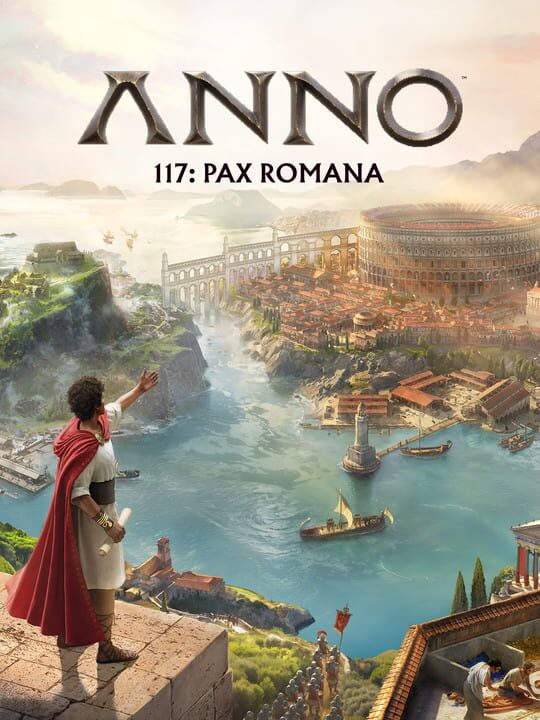
Anno 117: Pax Romana
Main Game
RELEASED
Nov 13, 2025
PlayStation 5PC (Microsoft Windows)+1byUbisoft Mainz•Ubisoft Entertainment
Overview:|
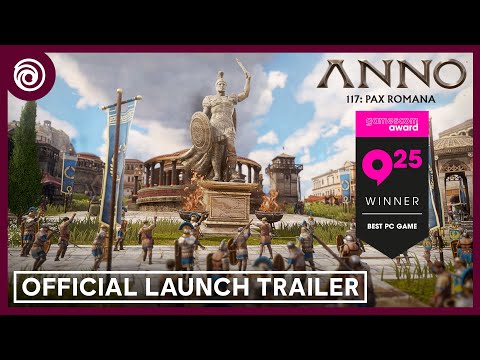
Anno 117: Pax Romana is a newly released Real Time Strategy and Simulator set in the Roman Empire (117 AD). You govern a province, focusing on intricate city-building and managing complex supply chains. The core loop demands strategic choices between economic growth and military strength, with community focus currently on how internal stability affects governance. This title supports single-player and multiplayer modes.
This is a newly released Real Time Strategy and Simulator set within the historical context of the Roman Empire in 117 AD. Players assume the role of a governor tasked with developing and managing a province under Imperial rule. The core experience revolves around intricate city-building mechanics, requiring careful attention to infrastructure development and the establishment of complex, interconnected supply chains to sustain the growing population and meet Imperial demands.
Core Gameplay Loop and Strategy
The primary gameplay loop centers on balancing resource management with strategic governance. Players must decide the trajectory of their province, choosing between focusing on economic prosperity through trade and production, or prioritizing military dominance through expansion and fortification. Decisions made regarding internal stability—such as managing potential internal rebellion or fostering cultural unity among diverse populations—directly influence the costs associated with maintaining peace and order.
Setting and Governance Choices
Set during the height of the Roman Empire, the game presents strategic dilemmas rooted in historical context. The narrative framework requires players to navigate the political landscape of the era. Success is measured not just by the size of one's city, but by the efficiency of production lines and the stability of the populace under your administration.
What are the primary game modes available?
The title supports multiple game modes, accommodating different playstyles. These include a primary campaign or scenario mode, a dedicated sandbox experience for pure construction, and likely competitive or cooperative multiplayer options, allowing for varied engagement with the simulation systems.
Key Features of Provincial Management
The simulation depth is a defining characteristic. Players manage not only basic needs but also specialized production chains necessary for advanced tiers of settlement. Strategic placement of industrial zones versus residential areas is crucial for optimizing logistics and minimizing negative externalities on citizen happiness.
How does the community currently view the initial state of the game?
As a newly released title, the community is actively engaged in exploring the depth of the strategic systems and the initial balance of the economy. Early feedback centers on understanding the long-term impact of the initial governance choices regarding internal dissent versus cultural integration, which appears to be a central mechanic defining the path to stability.
Game Details
Primary Name: Anno 117: Pax Romana
Alternative Names:
Anno 117 (Abbreviation)
Anno117.exe (Windows Executable)
Type: Main Game
Series: Anno
Developer: Ubisoft Mainz, Ubisoft Blue Byte
Publisher: Ubisoft Entertainment
Engine: Anno Engine
Release Information
Release Date: Nov 13, 2025
Genres & Themes
Genres: Real Time Strategy (RTS), Simulator, Strategy
Themes: Historical
Platforms
PlayStation 5PC (Microsoft Windows)Xbox Series X|S
Game Modes
Perspective: Bird view / Isometric
Player Modes: Single-player
Game Modes: Single player, Multiplayer, Co-operative
Age Ratings
ESRB:T (Teen)
PEGI:12+
CERO:B (12+)
USK:12+
GRAC:12+
CLASS_IND:12+
ACB:PG (Parental Guidance)




 Soren
Soren